

 Image 1 of 2
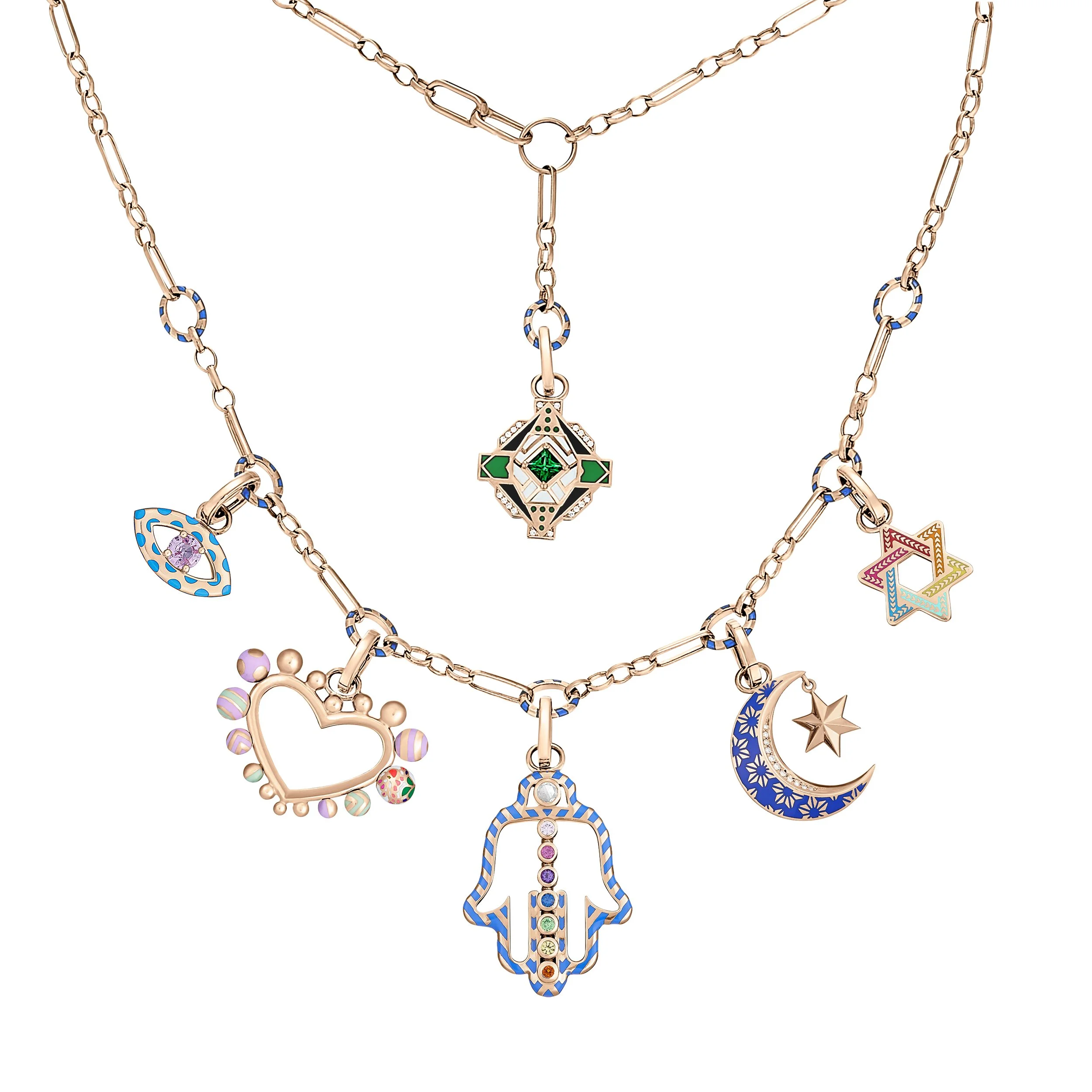 Image 2 of 2
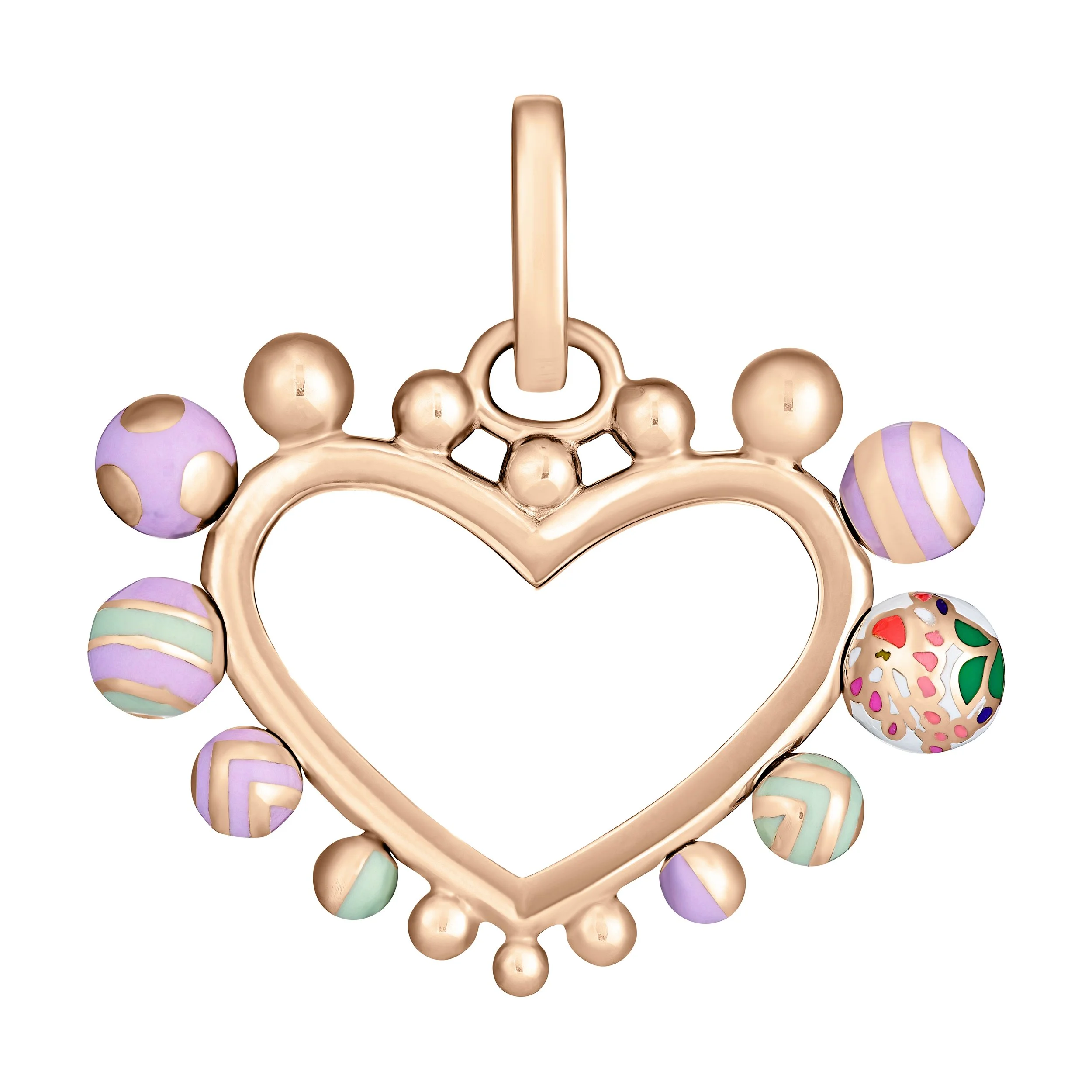
14ct yellow gold, lacquer enamel including detachable link.
Available in stock.
The origins of the Heart emoji date back all the way into ancient Egypt. Bearing only a passing resemblance to the biological form of our hearts, the shape is thought to have evolved from a variety of sources, the earliest of which is the Egyptian hieroglyph for “ib” meaning “inside” or a person’s internal senses, gut feelings. The Seat of the Soul. The Egyptians believed these were a feminine inheritance, “the heart of my mother”. The Iset Ib was the Heart of Isis, the Divine Mother of us all.
At the same time, botanical historians link the form to the Silphium seed, a plant that was used as a powerful contraceptive. The link to love and sex aligned it with romance. So much so that it appeared on silver coins in Cyrene (Libya of 480 BC), and was harvested to extinction.
One of the most enduring symbols in jewellery, in the West the heart has come to represent love and affection since the Middle Ages. Already in 16th Britain, enamel and gold pendants, with diamonds, were achieving great popularity. Unearthed by a detectorist in Warwickshire, a pendant and gold chain thought to have been a gift from Henry VIII to Katherine of Aragon is now in the collection of the British Museum.
As with many other sentimental forms of jewellery, Queen Victoria popularised the heart in the 19th century. Heart-shape lockets in rose cut diamonds, enamel, or rubies, where created with rock crystal cases to hold a lock of hair or a portrait of a loved one. A century earlier in Scotland, the ‘Witches Heart’ was used a talisman to protect against evil spirits, similar to the use of the Evil Eye. In 18th century France, the heart and the eye were often combined.
For me, the heart is also a symbol of Venus, the Goddess of Love, of abundance and the garden. Raised within a Catholic tradition, the flaming heart is a symbol of Divine Love and compassion, as much as I think of it as a Mexican milagros charm - themselves adorned with wings, eyes, and, frequently, tears.
Our I Carry Your Heart with me (I carry it in my Heart) pendant is named for the poem by EE Cummings that opens with this line. An ode to the power of love, for Alice the poem also expresses the beauty in holding our loved ones close, to the strength of heart energy to keep us grounded and connected, to the power of grief as a reflection of the most powerful kind of love.
The charm is shipped with a connector which can attach freely to your own chains, or a chain with 3 or 5 enamel links can be purchased here, and with additional connectors here.
14ct yellow gold, lacquer enamel including detachable link.
Available in stock.
The origins of the Heart emoji date back all the way into ancient Egypt. Bearing only a passing resemblance to the biological form of our hearts, the shape is thought to have evolved from a variety of sources, the earliest of which is the Egyptian hieroglyph for “ib” meaning “inside” or a person’s internal senses, gut feelings. The Seat of the Soul. The Egyptians believed these were a feminine inheritance, “the heart of my mother”. The Iset Ib was the Heart of Isis, the Divine Mother of us all.
At the same time, botanical historians link the form to the Silphium seed, a plant that was used as a powerful contraceptive. The link to love and sex aligned it with romance. So much so that it appeared on silver coins in Cyrene (Libya of 480 BC), and was harvested to extinction.
One of the most enduring symbols in jewellery, in the West the heart has come to represent love and affection since the Middle Ages. Already in 16th Britain, enamel and gold pendants, with diamonds, were achieving great popularity. Unearthed by a detectorist in Warwickshire, a pendant and gold chain thought to have been a gift from Henry VIII to Katherine of Aragon is now in the collection of the British Museum.
As with many other sentimental forms of jewellery, Queen Victoria popularised the heart in the 19th century. Heart-shape lockets in rose cut diamonds, enamel, or rubies, where created with rock crystal cases to hold a lock of hair or a portrait of a loved one. A century earlier in Scotland, the ‘Witches Heart’ was used a talisman to protect against evil spirits, similar to the use of the Evil Eye. In 18th century France, the heart and the eye were often combined.
For me, the heart is also a symbol of Venus, the Goddess of Love, of abundance and the garden. Raised within a Catholic tradition, the flaming heart is a symbol of Divine Love and compassion, as much as I think of it as a Mexican milagros charm - themselves adorned with wings, eyes, and, frequently, tears.
Our I Carry Your Heart with me (I carry it in my Heart) pendant is named for the poem by EE Cummings that opens with this line. An ode to the power of love, for Alice the poem also expresses the beauty in holding our loved ones close, to the strength of heart energy to keep us grounded and connected, to the power of grief as a reflection of the most powerful kind of love.
The charm is shipped with a connector which can attach freely to your own chains, or a chain with 3 or 5 enamel links can be purchased here, and with additional connectors here.