

 Image 1 of 2
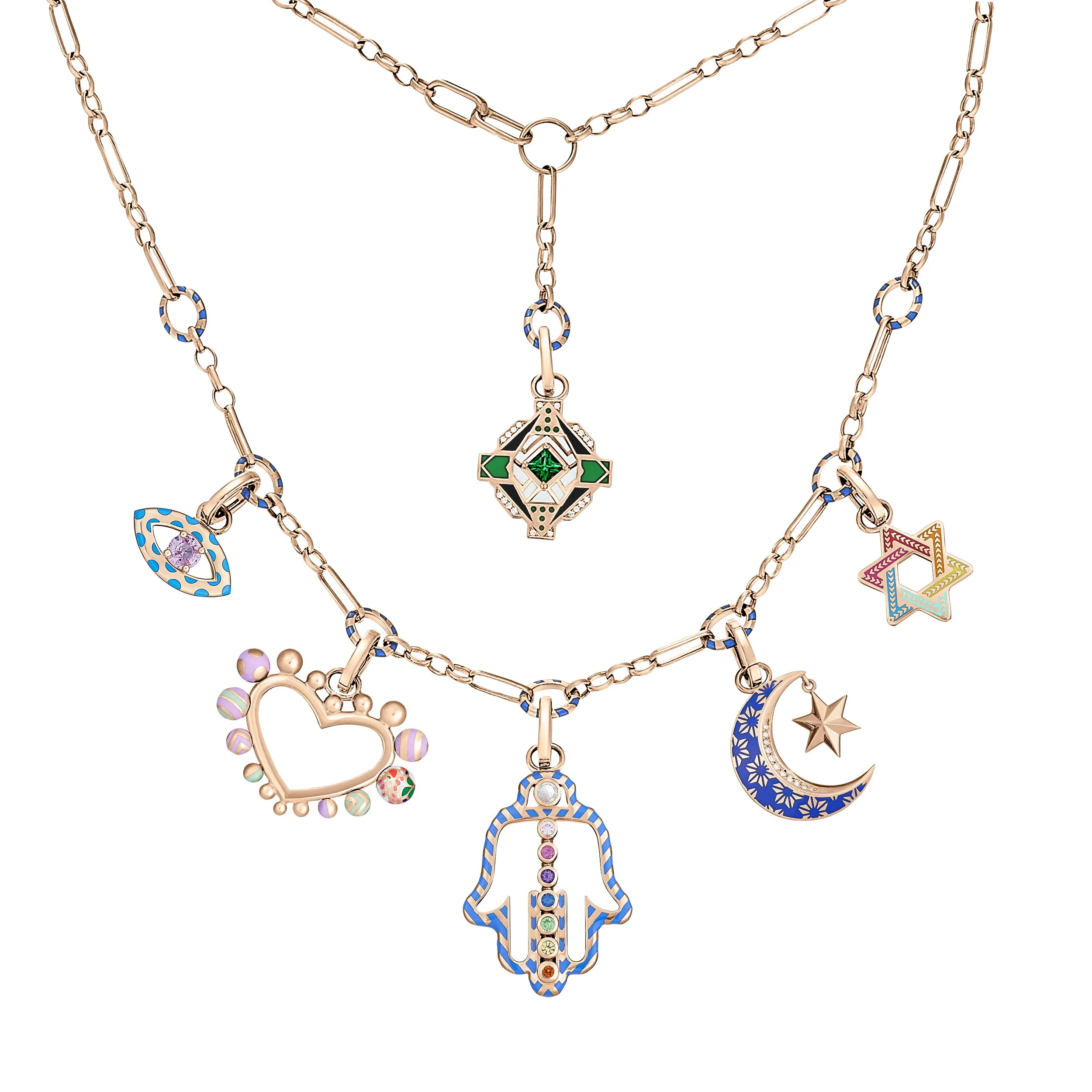 Image 2 of 2
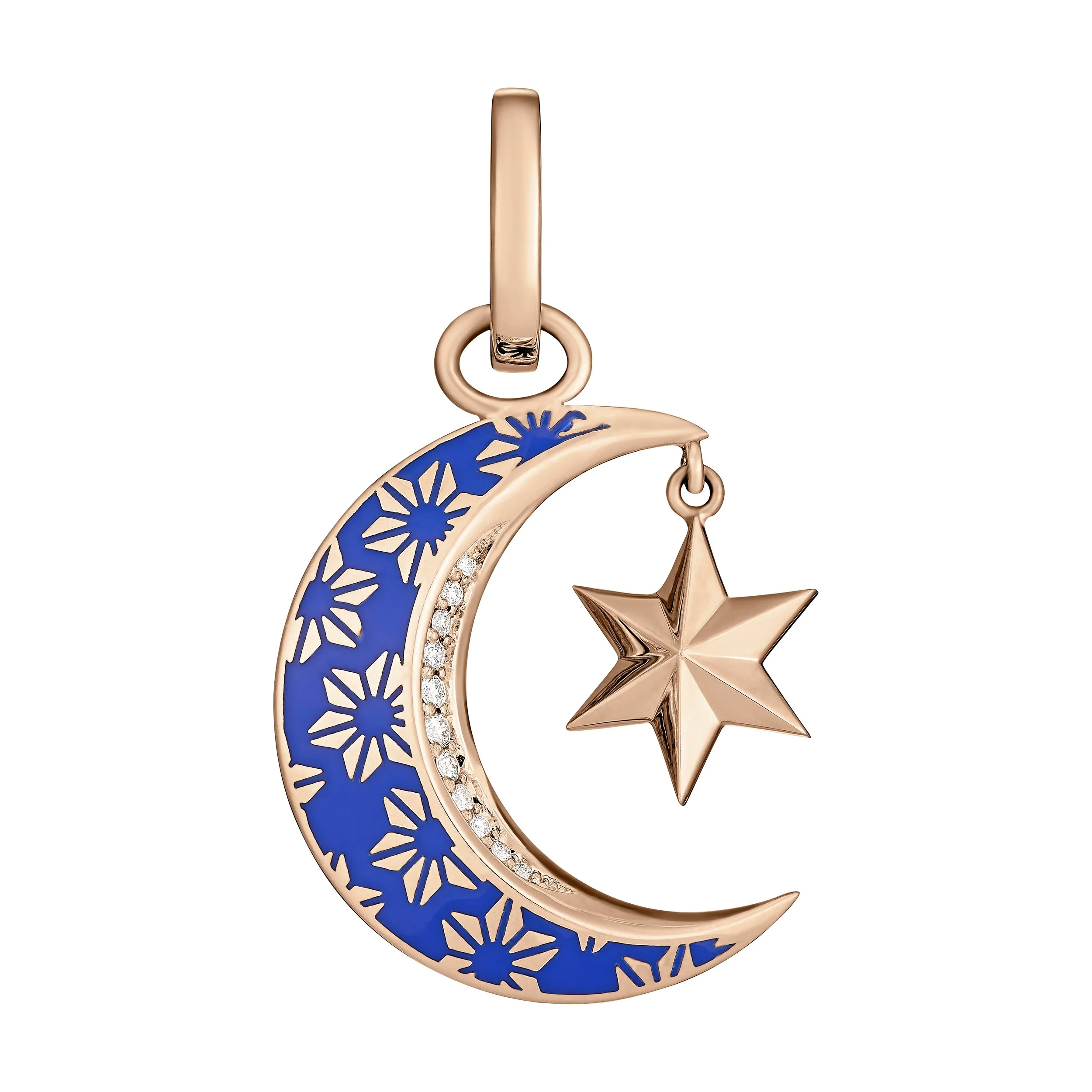
14ct yellow gold, sterling silver, lacquer enamel, diamonds including a detachable clasp.
Available in stock.
Using stars and crescent moons as pendants or brooches reached a zenith in Victorian and Edwardian era jewellery. Crescent pendants in rich enamel, pearls and diamonds, represented the powerful femininity of the moon, inspiring a new generation of women entering the workforce. Stars could be found carved into gemstones, as settings, as well as jewels, the star representing wayfinding, the celestial map that guides travellers’ home.
Although the English astronomer Thomas Harriot first drew the Moon from his telescope observations on 26 July 1609, the Victorian era witnessed the opening up of the night sky. Halley’s Comet appeared in 1835 during the early Victorian era, sparking intense scientific interest and a trend for celestial-themed jewellery that continues to endure.
The crescent moon and star symbol originated in the Ancient Near East as a Sumerian, Babylonian and Byzantine icon, pre-dating Islam by thousands of years. Representing the moon god Sin and the goddess Ishtar (Venus), it became associated with Islam primarily through the Ottoman Empire. Deployed by the Seljuk Turks who dominated Anatolia in the 12th century, the symbol became much more widely adopted after the Ottoman conquering of Constantinople, where it was used throughout the city in celebration of Artemis, (Diana, Luna, goddess of the moon), who wore a crescent on her brow.
The charm is shipped with a connector which can attach freely to your own chains, or a chain with 3 or 5 enamel links can be purchased here, and with additional connectors here.
14ct yellow gold, sterling silver, lacquer enamel, diamonds including a detachable clasp.
Available in stock.
Using stars and crescent moons as pendants or brooches reached a zenith in Victorian and Edwardian era jewellery. Crescent pendants in rich enamel, pearls and diamonds, represented the powerful femininity of the moon, inspiring a new generation of women entering the workforce. Stars could be found carved into gemstones, as settings, as well as jewels, the star representing wayfinding, the celestial map that guides travellers’ home.
Although the English astronomer Thomas Harriot first drew the Moon from his telescope observations on 26 July 1609, the Victorian era witnessed the opening up of the night sky. Halley’s Comet appeared in 1835 during the early Victorian era, sparking intense scientific interest and a trend for celestial-themed jewellery that continues to endure.
The crescent moon and star symbol originated in the Ancient Near East as a Sumerian, Babylonian and Byzantine icon, pre-dating Islam by thousands of years. Representing the moon god Sin and the goddess Ishtar (Venus), it became associated with Islam primarily through the Ottoman Empire. Deployed by the Seljuk Turks who dominated Anatolia in the 12th century, the symbol became much more widely adopted after the Ottoman conquering of Constantinople, where it was used throughout the city in celebration of Artemis, (Diana, Luna, goddess of the moon), who wore a crescent on her brow.
The charm is shipped with a connector which can attach freely to your own chains, or a chain with 3 or 5 enamel links can be purchased here, and with additional connectors here.